Feast of St. Francis of Assisi
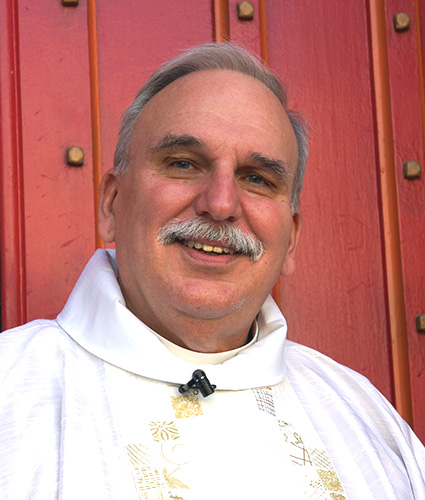
A note from Fr. Jeff
Great News! This coming Sunday, October 4th, I will be with you and we will celebrate together the Feast of St. Francis of Assisi, the beloved patron saint of animals and all God's creation, the most popular garden statue saint, and certainly one of my most favorite saints. We will bring our loving pets to church to be blessed, and we will remember in a special way all those pets who are no longer with us, but remain steadfast in our hearts forever.
As part of my note this week, I share with you some excerpts from a sermon I preached on Francis' feast day a few years back.

Today we reflect and celebrate a remarkable life, a life that speaks and mirrors the very heart of Christ's Gospel, a life that resonates with a profound and often forgotten truth: that all of creation is a testament to God's love. I speak of St. Francis of Assisi.
When we think of St. Francis, what comes to mind? We see images of a man in a simple brown robe, surrounded by birds and squirrels, a wolf kneeling at his feet. These images are not merely charming stories; they are windows into a soul so deeply attuned to the divine that it saw God not only in the face of a beggar, but in the flutter of a bird's wings, the gentle rustle of leaves, and the ferocious eyes of a wolf.
For Francis, there was no hierarchy of creation. He didn't see animals as "less than" or as mere resources for human use. He saw them as his brothers and sisters. He called the sun "Brother Sun," the moon "Sister Moon," and the birds "Brother Birds." This wasn't just poetic language; it was a reflection of his lived theology. He understood that we are all part of the same divine family, woven together in a tapestry of creation by the hands of a loving God.
There's the famous story of the wolf of Gubbio. A fierce wolf was terrorizing this small Italian town, and the people were terrified. But Francis, instead of picking up a weapon, walked out to meet the wolf. He spoke to the wolf not as a predator, but as a creature in pain, and he made a pact with the animal. He promised the wolf that the town would care for it, and in return, the wolf would no longer harm the people. And so, it was. I'll add a disclaimer here. Don't try this at home!
This story, and countless others like it, reveals a radical truth: that love, true love, can bridge the gap between species. Francis’s love for animals was not sentimental; it was sacramental. It was a love that saw in every creature a reflection of its Creator. He saw the glory of God in the humble worm and the soaring eagle. He saw a shared vulnerability, a shared dependence on the goodness of God.
In our world today, we have become so separated from that natural world that Francis revered. We live in concrete jungles, disconnected from the rhythm of the seasons, the life cycles of plants and animals. We often see nature as a commodity, something to be exploited, or at best, a backdrop for our human drama.
But Francis calls us back to a different way of being today. He challenges us to open our eyes and our hearts. He asks us to see the sparrow not just as a bird, but as a "brother or sister," a fellow creature singing a song of praise to the Creator. He invites us to listen to the cries of the Earth, to the groans of a planet wounded by our greed, our indifference, our neglect, and our excess.
His message to us is so simple, yet so profound: love is not just for our fellow humans, although it would be good to start there. It extends to all of God's creation. It is a love that embraces the spider and the whale, the flower and the tree. It is a love that recognizes that we are all interconnected, that the health of our planet is inseparable from the health of our souls.
So, let us carry a little of St. Francis's life testament in our hearts. Let us look at the world with fresh eyes. Let us listen with keen ears. Let us treat our sacred creation with the reverence it deserves. For in loving the creatures of God, we are truly loving God. And in caring for the Earth, we are tending to the very garden that God has entrusted to our care. May we be good stewards of all that has been entrusted to us. Amen! May it be so!
And so, we pray A Litany For All Creation
To begin, call out the names of those animals you are caring for, and call out the names of those animals that are no longer with us.
Holy God, creator of heaven and earth,
Have mercy upon us.
Holy and Mighty, Redeemer of the world,
Have mercy upon us.
Holy Immortal One, Sanctifer of the faithful,
Have mercy upon us.
Grant that all your creatures may serve you with thanksgiving;
Pour out your blessing on earth, O God.
Grant favorable weather, temperate rain, and fruitful seasons, providing food and drink for all your creatures;
Pour out your blessing on earth, O God.
Open our eyes to the wonder of creation, that we may see you in all your works;
Pour out your blessing on earth, O God.
Stir in us the desire to care for your creation;
Pour out your blessing on earth, O God.
Make us wise and faithful stewards of creation, caring for the earth, the waters, the air, and all that live therein;
Pour out your blessing on earth, O God.
Forgive us who waste and pollute your creation and strengthen us to restore what we have disregarded;
Pour out your blessing on earth, O God.
Look with compassion on those that are abused and mistreated, show us their dignity in your creation;
Pour out your blessing on earth, O God.
Remember those creatures that have died yet remain dear to us that they may rejoice in your new creation.
Pour out your blessing on earth, O God.
Holy Immortal One: No sparrow falls without your knowing it; nothing dies but is remembered by you; nothing comes into being that you do not see. Give us courage and resolve to build up the common good, holding fast to the hope of a new creation in which all shall dwell eternally, through Jesus Christ, our Risen Savior. Amen.
Photo by Wenhao Ruan on Unsplash



Comments